





The Role of Credentialing in Boosting Practice Growth
Credentialing is central to a practice’s growth and operational efficiency. It verifies a provider’s qualifications, work history, and certifications to confirm they meet required standards for delivering care. A robust credentialing process reduces legal exposure and strengthens trust with patients and insurance providers. This article examines credentialing’s impact on practice growth, steps to optimize revenue through credentialing, and best practices for integrating credentialing with revenue cycle management. For practices looking to streamline this essential process, specialized credentialing services can make a significant difference.
Key Takeaways
- Credentialing verifies healthcare providers’ qualifications to ensure compliance with care delivery standards.
- An effective credentialing process reduces legal risks and builds trust with patients and insurers.
- The credentialing process includes application submission, credential verification, and ongoing re-credentialing.
- Proper credentialing saves time and resources, enhancing a practice’s competitiveness in healthcare markets.
- Credentialing improves cash flow by ensuring providers are in-network for timely reimbursements.
- Streamlined credentialing reduces administrative burdens, allowing staff to focus more on patient care.
- Patient trust increases when practices comply with credentialing standards, boosting loyalty and referrals.
- Understanding payor requirements and timely submissions are critical for maximizing credentialing benefits.
Credentialing Process
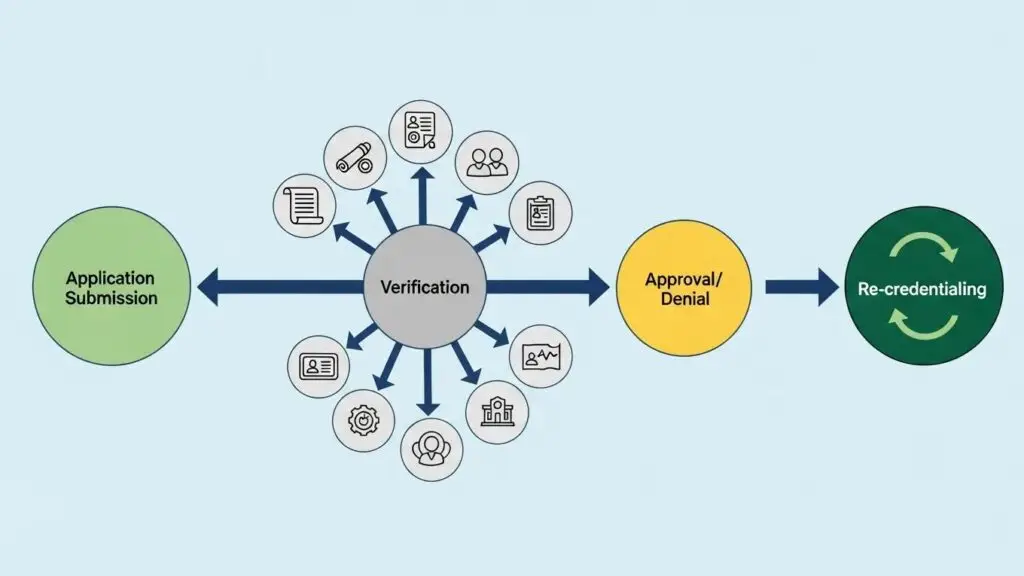
The credentialing process is a rigorous sequence designed to assess and verify a provider’s qualifications. It typically includes initial application submission, comprehensive verification of credentials, and periodic re-credentialing to confirm ongoing competence. This thorough approach helps ensure that only qualified practitioners deliver care, protecting patients and the practice. When implemented effectively, credentialing can save time and resources while improving a practice’s competitive position.
Benefits of Credentialing

Effective credentialing delivers measurable benefits that support practice growth and patient satisfaction. Here are three key advantages:
- Improved Cash Flow: Credentialing ensures that providers are in-network, which directly enhances revenue through timely reimbursements.
- Reduced Administrative Burden: Streamlined credentialing processes alleviate the administrative load on staff, allowing them to focus on patient care.
- Enhanced Patient Trust: Patients have greater confidence in practices that are compliant with credentialing standards, driving patient loyalty and referrals.
Practices that aim to leverage credentialing effectively must understand payor requirements and submit documentation on time to realize the full benefits.
Frequently Asked Questions
1. What are the key components of the credentialing process in healthcare?
The credentialing process typically includes application submission, verification of education and training, review of professional practice history, and background checks. Ongoing re-credentialing confirms that providers maintain qualifications and comply with industry standards. A reliable credentialing process ensures healthcare professionals are qualified to deliver safe and effective patient care.
2. How often should healthcare providers undergo re-credentialing?
Providers should undergo re-credentialing at regular intervals—commonly every two to three years—depending on organisational or payer policies. Re-credentialing reviews qualifications, new certifications, and any changes in status such as disciplinary actions. Regular re-credentialing helps maintain high standards and supports the delivery of safe, quality care.
3. What are the potential consequences of inadequate credentialing?
Inadequate credentialing can result in legal liabilities, reduced patient trust, and financial losses from denied claims and reimbursements. It can also harm a practice’s reputation and make it harder to secure contracts with payors. Comprehensive credentialing procedures are essential to protect operations and ensure compliance with regulatory standards.
4. How can credentialing improve patient satisfaction?
Credentialing assures patients that they receive care from qualified professionals who meet established standards, which increases confidence and strengthens patient-provider relationships. Compliance with credentialing processes also reduces administrative errors that can affect care, contributing to higher loyalty and more referrals.
5. Are there technology solutions available to streamline the credentialing process?
Yes. Credentialing software and managed services can automate tasks such as data verification, document management, and tracking re-credentialing deadlines, significantly reducing administrative burden. Leveraging technology helps practices improve credentialing efficiency and minimise the risk of errors or delays.
6. How do payor requirements impact the credentialing process?
Payor requirements influence credentialing because each insurer may specify particular documentation and standards for provider enrollment. Understanding and tracking these requirements helps expedite credentialing and secure timely reimbursement. Practices must remain current with payor policies and maintain clear communication with insurers to address issues during credentialing or re-credentialing.
7. What role does ongoing education play in the credentialing of healthcare providers?
Ongoing education is fundamental to credentialing, ensuring providers stay current with medical knowledge, clinical practices, and technology. Many credentialing bodies require continuing education to demonstrate professional development and clinical competence. That commitment to lifelong learning enhances provider skills and contributes to improved patient outcomes.
Conclusion
Robust credentialing processes ensure providers meet required standards, safeguarding patient care and reinforcing trust. Effective credentialing streamlines operations and supports timely reimbursements, which improves revenue and fosters long-term patient loyalty. Prioritising credentialing strengthens a practice’s competitive position. Take the next step toward optimising your practice by exploring specialised credentialing services tailored to your needs today.