





Understanding Healthcare Credentialing Services: A Professional Guide to the Credentialing Process in Healthcare
The credentialing process in healthcare is a critical mechanism that ensures healthcare providers meet specific standards of quality and safety. This process involves verifying the qualifications, experience, and professional history of healthcare professionals, which is essential for maintaining high standards in patient care. In this article, we will explore the intricacies of the credentialing process, its importance, and the essential steps involved. Understanding this process is vital for healthcare organizations aiming to enhance their operational efficiency and compliance with regulatory standards. We will also discuss the key stakeholders involved, regulatory requirements, common challenges faced, and best practices for effective implementation.
Comprehensive Guide to Understanding the Credentialing Process in Healthcare
Credentialing in healthcare refers to the systematic process of verifying the qualifications and professional background of healthcare providers. This process is crucial for ensuring that only qualified individuals are allowed to deliver care to patients. Credentialing typically involves a thorough review of a provider’s education, training, experience, and any disciplinary actions. By maintaining rigorous credentialing standards, healthcare organizations can enhance patient safety and improve overall care quality.
Overview of Healthcare Credentialing
Healthcare credentialing is a comprehensive evaluation process that assesses the qualifications of healthcare professionals. This includes verifying their education, training, and professional experience to ensure they are competent to provide care. Credentialing also involves checking for any malpractice claims or disciplinary actions against the provider. This thorough vetting process is essential for compliance with healthcare regulations and for maintaining the trust of patients and stakeholders.
Importance of Credentialing Services
Credentialing services play a vital role in the healthcare system by ensuring that providers are qualified to deliver safe and effective care. The importance of these services can be summarized as follows:
- Ensures Provider Qualifications: Credentialing verifies that healthcare providers have the necessary education and training to perform their duties.
- Critical for Patient Safety: By ensuring that only qualified professionals provide care, credentialing helps to protect patients from potential harm.
- Impact on Telehealth: As telehealth services expand, credentialing becomes increasingly important to ensure that remote providers meet the same standards as in-person providers.
Outsourcing credentialing services can significantly enhance the efficiency of this process. Companies like PracticeForces specialize in providing comprehensive credentialing solutions, allowing healthcare organizations to focus on patient care while ensuring compliance and quality.
Essential Steps in the Credentialing Process
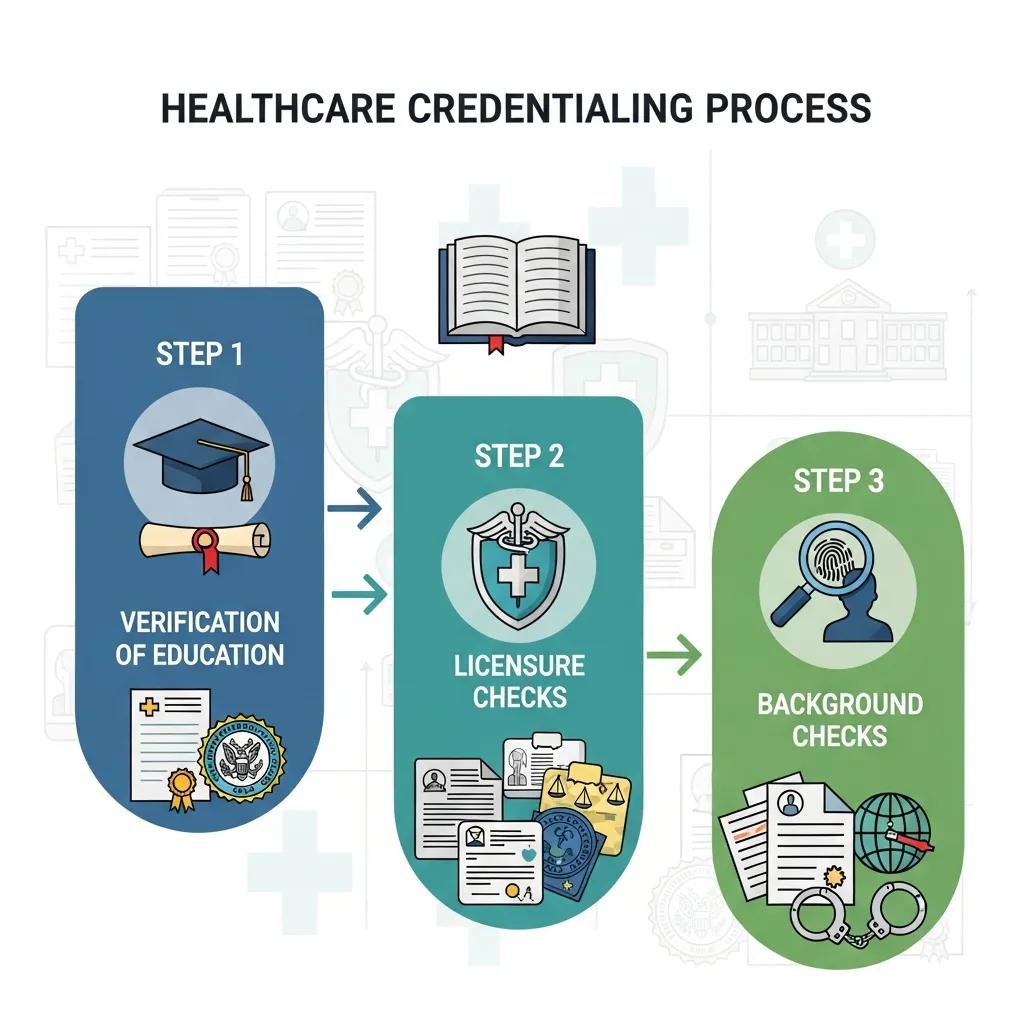
The credentialing process involves several essential steps that healthcare organizations must follow to ensure thorough verification of provider qualifications. These steps include:
- Verification of Education and Training: Confirming the educational background and training of the provider.
- Licensure Checks: Ensuring that the provider holds a valid and active license to practice in their respective field.
- Background Checks: Conducting criminal background checks and reviewing any malpractice claims or disciplinary actions.
These steps are crucial for maintaining the integrity of the healthcare system and ensuring that providers are qualified to deliver care.
The importance of thorough background checks and licensure verification in credentialing is further emphasized by recent research.
Healthcare Credentialing: Background Checks & Licensing
Moreover, background checks are one of the most critical aspects of the credentialing process. They ensure that each candidate complies with national licensing standards.
Trustworthy healthcare professional verification using blockchain technology, D Hawashin, 2023
| Step | Description | Importance |
|---|---|---|
| Verification of Education | Confirming the provider’s educational qualifications | Ensures foundational knowledge |
| Licensure Checks | Validating active licenses | Ensures legal ability to practice |
| Background Checks | Reviewing criminal history and malpractice claims | Protects patient safety |
This table illustrates the critical steps involved in the credentialing process and their significance in maintaining healthcare quality.
Key Stakeholders in Credentialing

Several key stakeholders are involved in the credentialing process, each playing a vital role in ensuring its effectiveness. These stakeholders include:
- Healthcare Providers: The individuals being credentialed, including physicians, nurses, and allied health professionals.
- Credentialing Organizations: Entities that perform the credentialing process, ensuring compliance with standards and regulations.
- Insurance Companies: Organizations that require credentialing to ensure that providers meet their criteria for reimbursement.
Understanding the roles of these stakeholders is essential for a successful credentialing process.
Regulatory Requirements
The credentialing process is governed by various regulatory requirements at both the state and federal levels. These regulations ensure that healthcare organizations maintain high standards of care and comply with legal obligations. Key regulatory requirements include:
- State Licensing Laws: Each state has specific laws governing the licensure of healthcare providers.
- Federal Regulations: Organizations such as the Centers for Medicare & Medicaid Services (CMS) set forth regulations that healthcare providers must follow.
- Ongoing Monitoring: Continuous monitoring of provider credentials is necessary to ensure compliance with evolving regulations.
Adhering to these regulatory requirements is crucial for healthcare organizations to avoid legal issues and maintain accreditation.
Beyond ensuring compliance, the regulatory landscape of credentialing also involves complex considerations regarding market fairness and oversight.
Healthcare Credentialing: Antitrust, Regulation & Oversight
AbstractThis Article explores the antitrust and other implications of private credentialing and accrediting programs in the health care industry. Although such programs are usually sponsored by powerful competitor groups, they serve the procompetitive purpose of providing useful information and authoritative advice to independent decision makers. Part One examines the risk that credentialing will sometimes be unfair to competitors and deceive consumers.
Private Credentialing of Health Care Personnel: An Antitrust Perspective—
Part One, NMP King, 1983
Common Challenges in Credentialing
Despite its importance, the credentialing process can present several challenges for healthcare organizations. Common challenges include:
- Complexity of Requirements: Navigating the various state and federal regulations can be overwhelming.
- Time-Consuming Paperwork: The extensive documentation required for credentialing can lead to delays in the process.
- Communication Delays: Coordinating with multiple stakeholders can result in communication breakdowns and slowdowns.
Addressing these challenges is essential for streamlining the credentialing process and ensuring timely provider onboarding.
Best Practices for Effective Implementation
To enhance the efficiency and effectiveness of the credentialing process, healthcare organizations can adopt several best practices:
- Leverage Technology: Utilizing credentialing software can automate many aspects of the process, reducing paperwork and improving accuracy.
- Outsource Credentialing Services: Partnering with specialized companies like PracticeForces can help organizations manage credentialing more effectively.
- Continuous Monitoring: Implementing ongoing monitoring of provider credentials ensures compliance with regulations and maintains high standards of care.
By following these best practices, healthcare organizations can improve their credentialing processes and enhance overall operational efficiency.
To further streamline operations, consider outsourcing credentialing services. This allows healthcare providers to focus on patient care while ensuring compliance and quality.
Frequently Asked Questions
What are the consequences of inadequate credentialing in healthcare?
Inadequate credentialing can lead to serious consequences, including compromised patient safety, legal liabilities, and loss of trust in healthcare providers. If a healthcare professional is not properly vetted, they may lack the necessary qualifications or have a history of malpractice, which can result in substandard care. Additionally, healthcare organizations may face penalties from regulatory bodies, damage to their reputation, and increased insurance costs. Therefore, thorough credentialing is essential to mitigate these risks and ensure high-quality patient care.
How often should healthcare providers undergo credentialing?
Healthcare providers should undergo credentialing at regular intervals, typically every two to three years, depending on the policies of the healthcare organization and regulatory requirements. Continuous monitoring of credentials is also recommended to ensure that any changes in a provider’s status, such as disciplinary actions or license renewals, are promptly addressed. This ongoing process helps maintain compliance with regulations and ensures that providers remain qualified to deliver safe and effective care throughout their careers.
What role does technology play in the credentialing process?
Technology plays a significant role in streamlining the credentialing process by automating various tasks, reducing paperwork, and improving accuracy. Credentialing software can facilitate the verification of education, training, and licensure, as well as manage documentation and communication with stakeholders. By leveraging technology, healthcare organizations can enhance efficiency, minimize errors, and ensure compliance with regulatory standards. This allows staff to focus more on patient care rather than administrative burdens, ultimately improving operational effectiveness.
What are the key differences between primary and secondary source verification in credentialing?
Primary source verification involves obtaining information directly from the original source, such as educational institutions or licensing boards, to confirm a provider’s qualifications. In contrast, secondary source verification relies on information obtained from third-party sources, such as online databases or peer references. While primary source verification is considered more reliable and is often required by regulatory bodies, secondary source verification can be useful for gathering additional context or supporting information during the credentialing process.
How can healthcare organizations overcome common challenges in credentialing?
Healthcare organizations can overcome common challenges in credentialing by implementing best practices such as leveraging technology, outsourcing credentialing services, and establishing clear communication protocols. Utilizing credentialing software can automate many tasks, reducing the time and effort required for paperwork. Partnering with specialized credentialing companies can also help manage the process more effectively. Additionally, fostering open communication among stakeholders can minimize delays and misunderstandings, ensuring a smoother credentialing experience.
What is the impact of telehealth on the credentialing process?
The rise of telehealth has significantly impacted the credentialing process by necessitating that remote providers meet the same standards as in-person providers. This includes verifying qualifications, licensure, and any disciplinary actions, regardless of the provider’s location. As telehealth services expand, healthcare organizations must adapt their credentialing processes to ensure compliance with state and federal regulations, which may vary by jurisdiction. This ensures that patients receive safe and effective care, whether in-person or through virtual consultations.
Conclusion
Understanding the healthcare credentialing process is essential for ensuring that providers meet the necessary standards for quality and safety in patient care. By implementing effective credentialing practices, healthcare organizations can enhance operational efficiency and maintain compliance with regulatory requirements. To further streamline your credentialing efforts, consider partnering with specialized services that can help manage this complex process. Explore our resources to learn more about optimizing your credentialing strategy today.