





When it comes to Billing With Oncology J Codes, oncology J codes (J9000–J9999) report chemotherapy drugs like doxorubicin, alemtuzumab, and bendamustine, requiring precise coding for proper reimbursement. PracticeForces applies certified coding accuracy above 98%. First-pass rejection rates under 5% to ensure clean J-code claims, submitting within 12–24 hours while staying compliant with evolving oncology billing guidelines.
Oncology J codes, found in the HCPCS J9000-J9999 range, report chemotherapy drugs like doxorubicin, bendamustine, and azacitidine for accurate reimbursement. Correct J code billing requires matching NDC units to administered dosages, documenting wastage, and verifying payer-specific coverage rules. Errors in these high-dollar claims trigger denials that damage cash flow, making precise coding, modifier use, and documentation essential for oncology practices submitting infusion and injection claims.
Key Takeaways
Oncology J codes (J9000-J9999) standardize chemotherapy drug billing for Medicare and insurance claim submissions nationwide.
Accurate J code selection directly impacts reimbursement rates and compliance; our 98%+ coding accuracy prevents costly denials.
Oncology practices require precise CPT and HCPCS code pairing for evaluation, management, and drug administration services.
Misaligned oncology coding reduces first-pass claim acceptance; our certified coders achieve sub-5% rejection rates consistently.
What exactly are oncology J codes?
Oncology J codes are HCPCS Level II codes that begin with the letter “J” followed by four digits. These codes specifically identify injectable drugs, chemotherapy medications, and other infused therapeutics that oncology practices administer to patients. The HCPCS code range J9000-J9999 covers chemotherapy drugs exclusively, creating a standardized code set required by Medicare and other health insurance providers for processing healthcare claims.
What drugs fall under the J9000-J9999 range?
The chemotherapy drug range includes agents such as doxorubicin hydrochloride (10 mg), alemtuzumab (10 mg), and bendamustine HCl (1 mg). Additional drugs in this category include:
Arsenic trioxide (1 mg)
Asparaginase (Erwinaze) per 1,000 IU
Azacitidine (1 mg)
Clofarabine (1 mg)
BCG for intravesical administration per instillation
Why does accurate J-code selection matter?
Choosing the right J-code directly determines reimbursement rates and compliance standing. A single mismatched code can trigger a claim denial or audit flag, delaying payment for expensive chemotherapy drugs that practices purchase upfront. Proper code selection protects the practice’s cash flow on high-cost infused therapeutics.
How do J codes and CPT codes work together?
Oncology billing with J codes and CPT codes forms a two-part claim: J codes report the specific drug administered. CPT codes capture the infusion or injection service itself. This division matters because a payer needs both pieces of information to reimburse an encounter accurately. Without the correct pairing, a claim faces denial, and the practice absorbs the cost of expensive infused therapeutics.
J codes identify the medication. These HCPCS Level II codes cover injectable drugs, chemotherapy agents, immunosuppressants, and inhalation solutions. For example, the chemotherapy drug range J9000-J9999 includes specific codes for agents like doxorubicin hydrochloride 10 mg and alemtuzumab 10 mg. CPT codes, by contrast, describe the work performed—the evaluation, the infusion, or the injection encounter.
Consider how the two interact in a single claim:
Service Rendered | Code Type | Example |
|---|---|---|
Drug supplied | J code | J9000 (doxorubicin, 10 mg) |
Infusion service | CPT code | 96413 (chemotherapy infusion) |
Patient visit | E/M code | 99214 (established patient) |
Which CPT codes pair with oncology J codes?
Oncology practices use evaluation and management (E/M) codes to report the visit itself. New patient office visits use 99201-99205, while established patient visits use 99211-99215. These codes capture the history, exam, and medical decision making that justify the treatment. The E/M code documents the encounter; the J code documents the drug; the infusion CPT code documents the administration.
Why does the J-code and CPT-code match matter for denials?
A mismatch between the J code and the CPT code triggers a denial. PracticeForces achieves coding accuracy above 98%, reducing the risk of mismatched J-code and CPT-code combinations that trigger denials. That accuracy protects cash flow because a single rejected oncology claim can represent hundreds or thousands of dollars in drug costs. Practices that pair the codes correctly submit cleaner claims, receive faster payments, and avoid the administrative burden of rework.
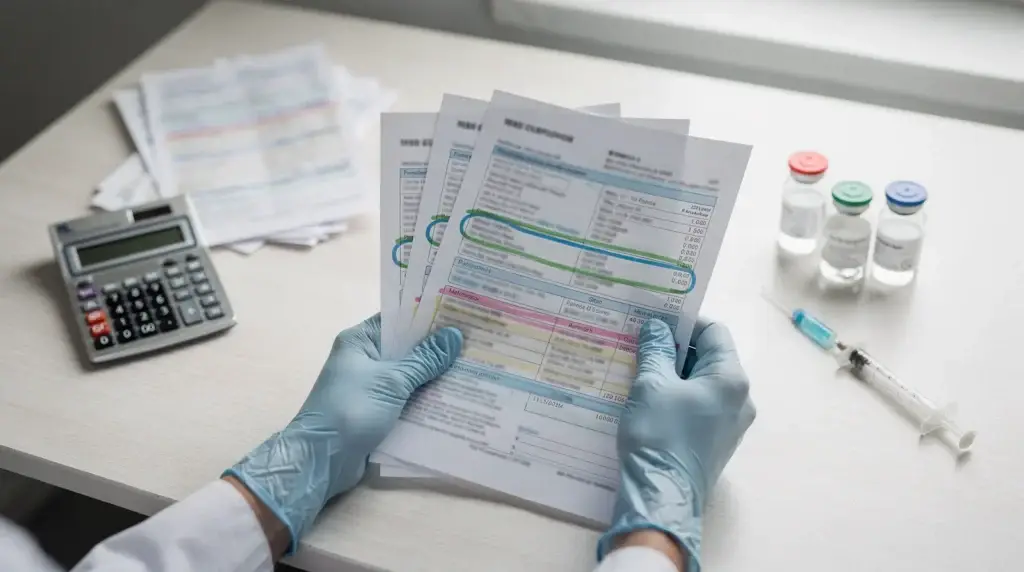
What errors hurt revenue with oncology J codes?
Oncology J code billing errors that hurt revenue most involve dosage unit mismatches, expired or repackaged drug codes, and administration code misalignment. These mistakes trigger claim denials and payment delays that directly reduce cash flow for expensive infused therapeutics. PracticeForces data shows first-pass rejection rates below 5% are achievable with proper J-code billing, protecting revenue on high-cost chemotherapy drugs.
Why do dosage unit errors cause denials?
HCPCS code range J9000-J9999 specifies exact dosage units for each chemotherapy drug. A single code like J9000 represents injection, doxorubicin hydrochloride, 10 mg. Billing 20 mg under the same code without proper modifier use or unit multiplier creates a mismatch that payers reject. Drug repackaging compounds this problem. When manufacturers change vial sizes or concentrations, the corresponding J code may change without notice.
How do administration code mismatches reduce reimbursement?
Oncology billing requires pairing the correct J code with the appropriate administration CPT code. Common errors include:
Using an evaluation and management (E/M) code when an infusion code is required
Submitting J codes without the matching administration code for the same date of service
Failing to append modifiers that distinguish first-hour from subsequent-hour infusion
Clients partnering with PracticeForces often experience improved revenue in the first 90 days by correcting J-code and administration code mismatches. The fix requires no new software — only disciplined code auditing and real-time claim validation before submission. Learn more in Transform Your Billing with Revenue Cycle Management Tools.
FAQ
What HCPCS range covers oncology J codes?
Oncology J codes fall within the HCPCS Level II range J9000-J9999, identifying chemotherapy drugs like doxorubicin, bendamustine, and azacitidine. PracticeForces applies coding accuracy above 98% to ensure these codes match administered dosages correctly.
Why do J codes and CPT codes need pairing?
J codes report the specific chemotherapy drug administered, while CPT codes capture the infusion or injection service performed. Payers require both pieces together; missing this pairing causes claim denials and delays reimbursement for costly therapeutics.
How does PracticeForces reduce oncology claim denials?
PracticeForces submits J-code claims within 12-24 hours and maintains first-pass rejection rates under 5%. Certified coders match NDC units to dosages and verify payer-specific coverage rules for compliant reimbursement.
Conclusion
In closing, mastering oncology J codes requires precision, compliance expertise, and a partner who understands the nuances of cancer care billing. PracticeForces brings specialized coding accuracy and denial management to oncology practices, ensuring claims move through the system efficiently while your team focuses on patient outcomes. With proven performance standards and a commitment to regulatory compliance, we help oncology providers transform billing complexity into reliable revenue—so you can concentrate on what matters most: delivering exceptional care. Call us today to see how our oncology billing specialists can protect your revenue.